Centralised Portal
for Solid Waste
Management
A National Portal for Registration and Data Reporting
of Solid Waste Management
Centralised Portal
for Solid Waste
Management
A National Portal for Registration and Data Reporting
of Solid Waste Management
Centralised Portal
for Solid Waste
Management
A National Portal for Registration and Data Reporting
of Solid Waste Management
Solid Waste Management (SWM) Rules, 2026
The Solid Waste Management Rules, 2026, were notified by the Ministry of Environment, Forest and Climate Change (MOEF&CC) on 27th January 2026, and came into force with effect from 1st April 2026.
These Rules establish a comprehensive regulatory framework for scientific and environmentally sound management of solid waste.
The Rules delineates the duties and responsibilities of various stakeholders involved in solid waste management, including the Urban Local Bodies (ULBs), Rural Local Bodies (RLBs), State Government Departments, State Pollution Control Boards (SPCBs)/Pollution Control Committees (PCCs), Waste Processing and Disposal Facilities, Bulk Waste Generators (BWGs), and other concerned agencies.
Download SWM Rules, 2026 (PDF)Key obligations that shape everything
Segregate at source, register with your local body, and account for what you generate.

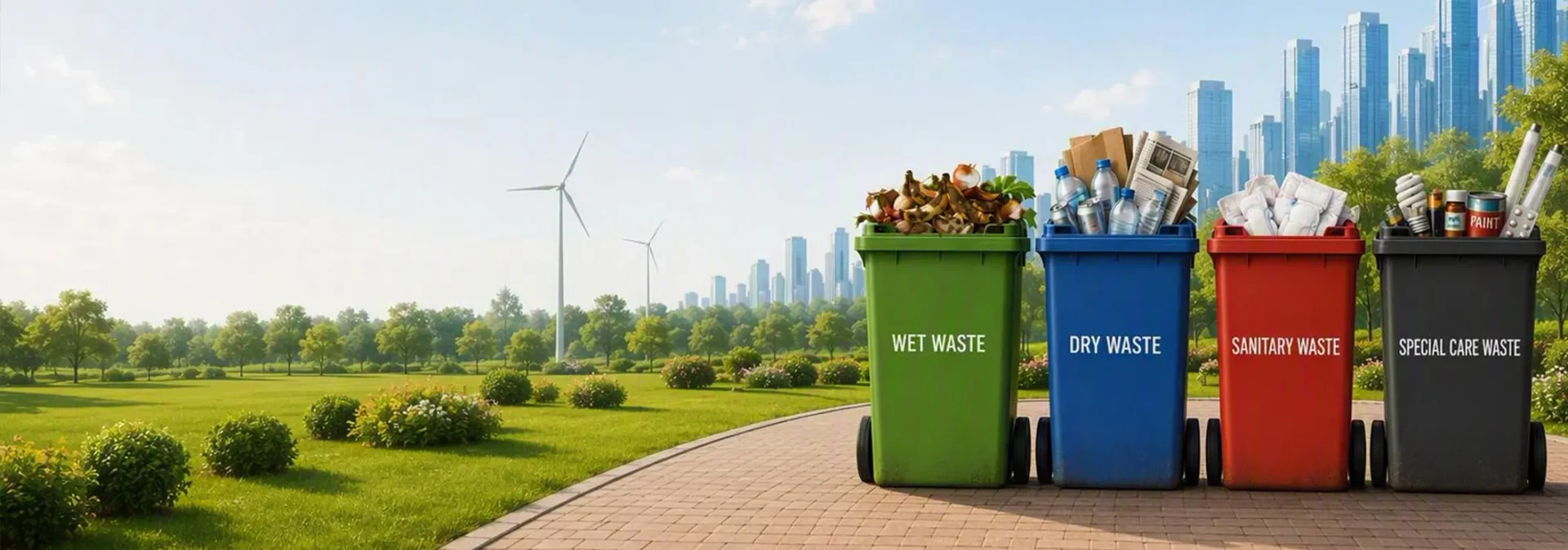
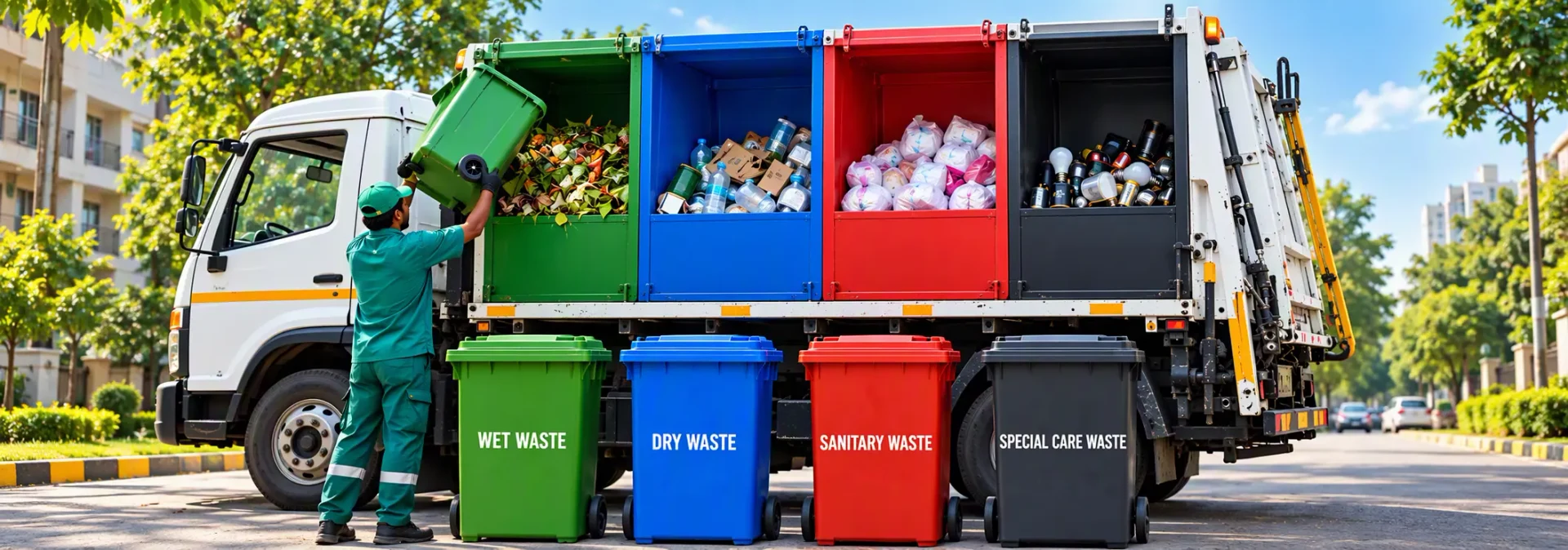
Four-stream segregation at source
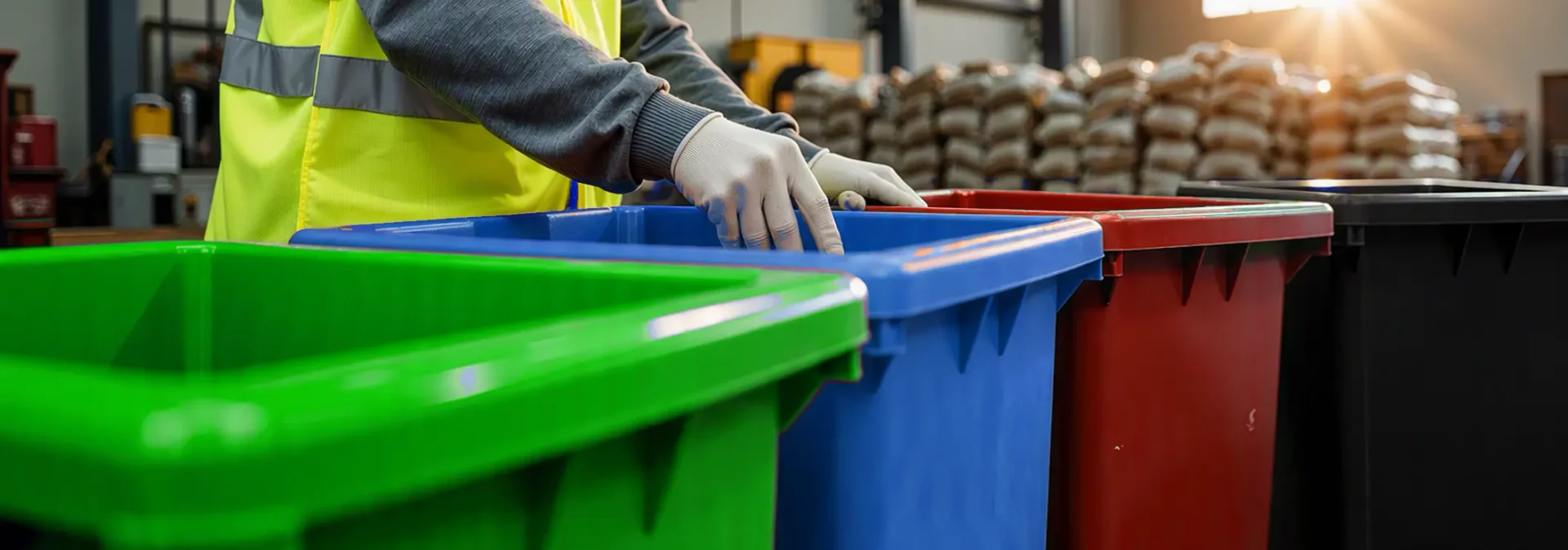
Wet, dry, sanitary and special care waste segregated at source and handed over separately to authorised waste collectors.

Extended Bulk Waste Generator Responsibility
BWGs to procure EBWGR certificates from local bodies for undertaking environmental sound waste management.

Regulatory Framework
Governing urban and rural local bodies with responsibility for infrastructure deployment, operational efficiency and compliance reporting.
Bulk Waste Generator
Register as Bulk Waste GeneratorEligibility Criteria
An entity qualifies as a BWG if it satisfies at least one of the following criterion:
Categories of Bulk Waste Generators
- Central Government department or undertaking
- Community place
- College
- Local body
- Other educational institution
- Private company
- Public building
- Public sector undertaking (PSU)
- Research Institute
- School
- State Government department or undertaking
- University
- Other
- Airport
- Auditorium
- Bus Station / Bus Depot
- Community Hall
- Conference centre
- Convention Hall
- Exhibition area
- Expo Centre
- Hospital
- Hostel
- Hotel
- Industrial unit and industrial area
- Mall
- Marriage or banquet hall
- Multiplex
- Nursing home
- Port / Harbour
- Railway Station / Railway
- Restaurant / Food Court
- Sport Complex
- Stadium
- Tourist Spot
- Wholesale Markets (Agricultural Mandis, Horticulture Mandis, Fish Markets and Meat Markets)
- Other
- Residential Societies / RWA
- Other
Waste Processing and Disposal Facilities
Register as Facility Refused Derived Fuel (RDF)
Refused Derived Fuel (RDF)
Facility where fuel is derived from combustible waste fraction of solid waste like plastic, wood, pulp or inorganic waste, other than chlorinated materials, in the form of pellets or fluff produced by drying, shredding, dehydrating and compacting of solid waste.
 Material Recovery Facility (MRF)
Material Recovery Facility (MRF)
Facility where solid waste other than wet waste and horticulture waste can be temporarily stored to facilitate segregation and sorting of collected waste and transfer of recyclables and non-recyclables to authorised recyclers or waste processors.
 Material Recovery Facility (MRF)-cum-Refused Derived Fuel (RDF)
MRF-cum-RDF
Facility combining the functions of a Material Recovery Facility and an RDF plant. Registration of MRF-cum-RDF plants is specifically referenced under Rule 11 of rules.
 Compressed Biogas (CBG)/Biogas Plant
CBG/Biogas Plant
Facility which entails enzymatic decomposition of the organic matter by microbial action to produce methane rich biogas.
 Compost Facility
Compost Facility
Facility which uses a controlled process involving microbial decomposition of organic matter.
 Waste to Energy (WtE)
Waste to Energy (WtE)
Facility using solid waste for generation of energy including thermal treatment for generation of electricity, biogas or compressed biogas.
 Integrated Solid Waste Management Facility
Integrated SWM Facility
Facility wherein the solid waste management processes namely segregation, recovery, storage, collection, recycling, processing, treatment or safe disposal are carried out.
 Co-Processing Facility
Co-Processing Facility
Facility using non-biodegradable and non-recyclable solid waste having calorific value exceeding 1500 kcal/kg as raw material or as a source of energy or both to replace or supplement natural mineral resources and fossil fuels in industrial processes.
 Common Biomedical Waste Processing Facility
Common Biomedical Waste Processing Facility
Facility for the management of sanitary waste, special care waste excluding biomedical waste covered under the Biomedical Waste Management Rules, 2016
 Sanitary Landfill
Sanitary Landfill
Facility for final and safe disposal of residual solid waste and inert waste on land in a facility designed with protective measures against pollution of ground water, surface water and fugitive air dust, wind-blown litter, bad odour, fire hazard, animal menace, bird menace, pests or rodents, greenhouse gas emissions, persistent organic pollutants slope instability and erosion.
 Waste Collection Agency
Waste Collection Agency
Facilities engaged in collection and transportation of solid waste. To register, facilities to kindly contact their ULB/RLB.
 Incinerator Facility
Incinerator Facility
A facility that thermally treats solid waste through controlled combustion (incineration) to reduce waste volume and/or recover energy, and includes all associated infrastructure such as waste feeding systems, combustion chambers, air pollution control systems, ash handling systems, and monitoring equipment.
Local Bodies
Urban Local Bodies (ULBs), District Panchayats (DPs) and Gram Panchayats (GPs) can register here to access the portal.